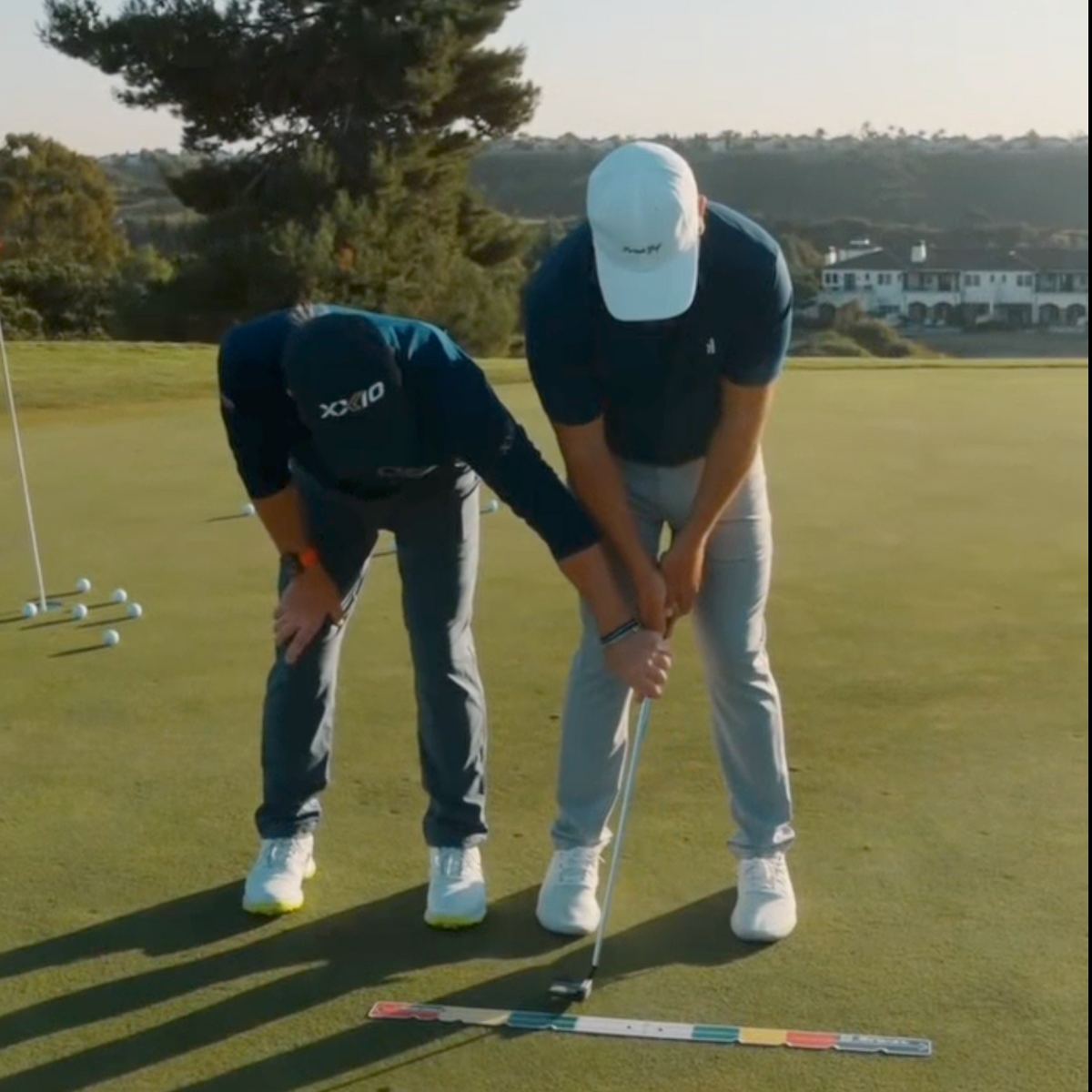
A four-footer gets easier when you know where to start it, how hard to hit it, and what a good stroke feels like. These eight tips give you something specific to try on the course or the practice green.
1. Read the slope around the cup
Before you set the ball down, look at the ground right around the hole. Which side is higher? Even a short putt can turn as it slows down. Decide where the ball should enter the cup, then work backward to choose your starting direction.
2. Pick a spot just ahead of the ball
From behind the ball, find a blade of grass or a tiny discoloration a few inches ahead on your chosen line. Use that spot to aim when you step in. A close target makes it easier to see where the ball needs to start, especially when the putt breaks.
3. Match the putter face to the back line
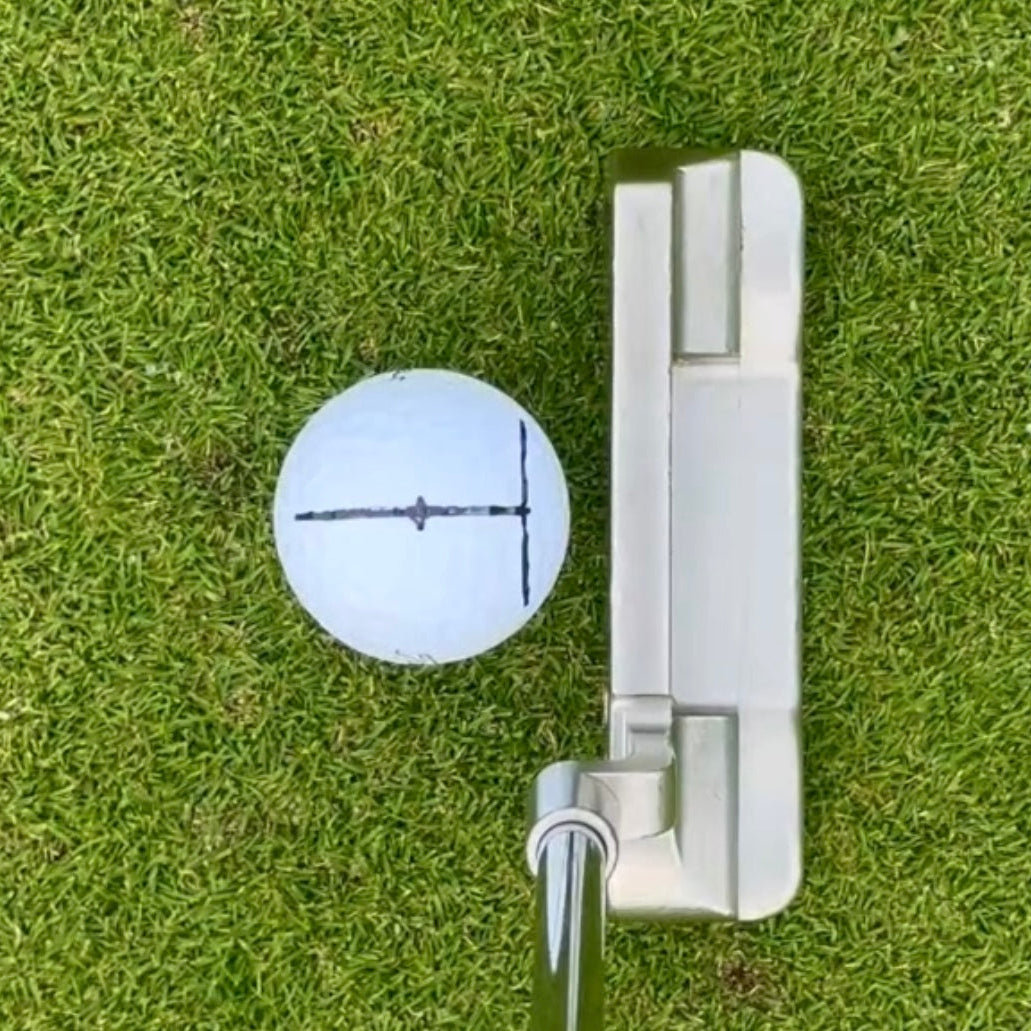
Use the Impact Ball Liner to draw a T on the ball. From behind, point the long line at your starting spot. At address, set the putter face parallel to the short line at the back of the ball. Now you have a clear reference for where the face is aimed.

4. Check your setup with a mirror
Set a putting mirror on a straight practice putt. Take your normal stance and notice where your eyes sit relative to the ball. Step away and set up again a few times to see whether you return to the same spot. Watch Rory McIlroy’s putting routine to see how he uses a mirror in his warm-up.

5. Choose a pace that fits the slope
On a level or uphill putt, give the ball enough pace to reach the cup confidently. On a quick downhill putt, let it arrive more softly. Make that decision before you address the ball so you can make one smooth stroke.
6. Keep the stroke small and finish it
Try a compact backstroke on a three-footer. Let the putter swing through, then hold your finish for a beat before following the ball with your eyes. This gives you a simple cue when you feel tempted to peek early.
7. Test your start line with two tees
On a straight practice putt, set two tees about a foot in front of the ball, just wider than the ball. Roll five putts through the gate and count how many clear both tees. If the gap feels too tight, widen it and work your way in.
8. Practice with one ball and keep score
Pick four spots around a hole, each about three feet away. Use one ball and go through your full routine at each spot. Count your makes out of four. Moving between putts lets you practice reading different breaks and resetting after a miss.
Try this in five minutes. Spend one minute checking your setup, two minutes rolling putts through a tee gate, and two minutes putting from different spots around the cup. Write down your score and try to beat it next time.