

Spend 20 Minutes on This and the Big Misses Disappear
Big misses always involve a face problem, a path problem, or both.
When the club moves too far from outside to inside, it cuts across the ball. That motion creates sidespin, which is what produces a slice. It’s similar to tennis. When the racquet cuts across the outside of the ball, it creates spin that makes the shot curve.
Golf works the same way.
When the club cuts across the ball, the spin sends it curving to the right for a right-handed player. The frustrating part is that the instinct is usually to aim farther left to try to manage the miss. But that only makes the problem worse. Aiming left often encourages the club to travel even more across the ball, which increases the slice.
Now the ball starts farther left and curves even farther right.
That’s how the big miss grows.
Yes, leaving the face wide open can cause a big miss too. But when the path is inconsistent, the face is constantly reacting to it. That makes the ball flight difficult to diagnose.
The real goal is to remove the path variable first.
When the club begins traveling on a neutral path, the big misses disappear. The ball may still curve slightly depending on the face, but the wild slice or pull is gone. The start line becomes predictable and the ball flight tightens up.
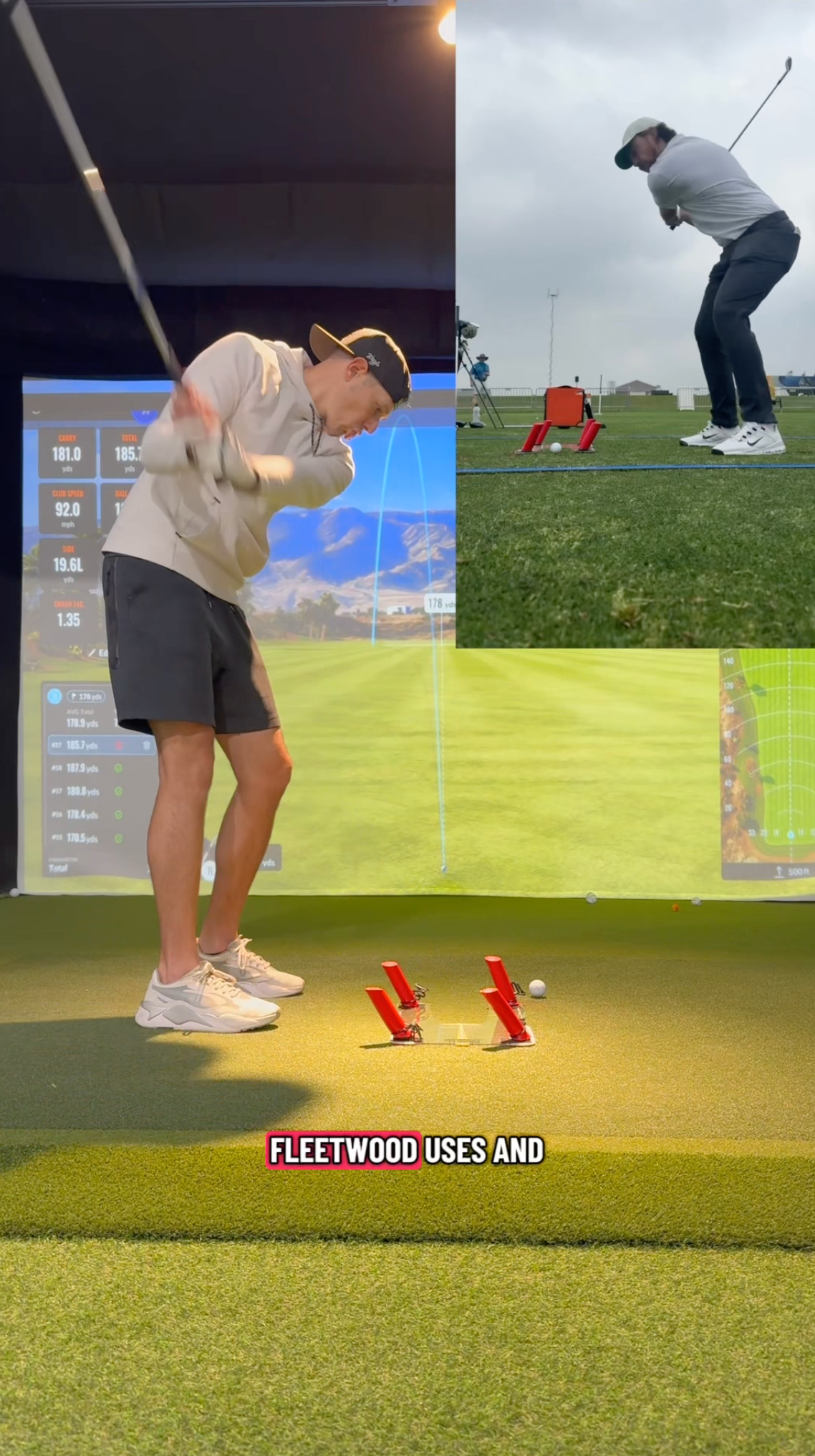
That’s where constraint training becomes powerful.
Instead of trying to feel the correct motion, the club is given a lane to travel through. Stay inside the lane and the path is correct. Miss the lane and you get instant feedback.
Spend 20 minutes working inside that lane and you’ll notice a huge difference. The exaggerated outside-to-inside move starts to disappear. The club begins approaching the ball from a much more neutral direction and the ball flight straightens out almost immediately.
Once the path becomes consistent, the rest of the swing becomes much easier to diagnose.
If a shot starts right, the face was open. If it starts left, the face was closed. The path is no longer muddying the picture.
And when you’re only solving for the face, improvement becomes much simpler.
See Speed Trap 2.0 >>More from the Practice Vault

Why Your “Signature” Backstroke Is Ruining Your Speed Control (and What to Do Instead)

A Simple Drill to Fix Your Over-the-Top Swing

How Do I Stop Missing Putts to the Right?

This Feels Like It Should Be Illegal... But It's Not

Why Putting Problems Are So Hard to Diagnose

How Can I Stop Pulling and Pushing My Putts?

Spend 20 Minutes on This and the Big Misses Disappear

Why Tour Players Check This Before Every Round

This Putting Drill is Brutal... But it Works

Why Practicing at Home Might Be Your Biggest Advantage

Why Two Lines Are Easier to Trust Than One

Get These Two Things Right and Putting Gets a Lot Easier

This Heavy Golf Ball Will Tell You Everything Wrong With Your Putting

Why Great Putters Obsess Over Setup

The Common Signs of a "Handsy" Putting Stroke

Why Almost All Tour Players Use This Training Aid

Bryson DeChambeau’s Simple System for Better Putting Distance Control

Try This Marking On Your Golf Ball Next Time You Play...

The #1 Thing All Great Golf Swings Have in Common
